
Nov 27 2026
The AI gap: what stands between AI investment and its return, with a real world example.
What the AI gap is, why it goes unnoticed, a real form as an example, and questions for leadership teams
TL;DR
Organizations are investing in AI to serve people faster and run more efficiently. Much of what that AI has to work with, including the forms people complete to get things done, was built for a different time. The distance between what is expected of AI and what it has to work with is the AI gap. Organizations that understand it and close it remove a cost they are already paying in staff time and allow AI to finish the tasks people give it.
Understanding the ‘AI Gap’
Ask a chief executive what AI will do for the organization and the answer is likely to be confident. Customers will be served faster and staff will spend less time on routine work. People will increasingly hand whole tasks to an AI agent that acts on their behalf. Budgets have been set on that basis and boards are following progress against it.
This is not a Digital team issue. They have been shouting about content debt and digital sprawl for years, along with the importance of a single platform.
The people an organization serves are becoming used to asking an AI assistant for an answer, and some are beginning to ask an AI agent to act for them. They will expect the organizations they deal with to be able to respond. The material all of this depends on receives less scrutiny. An organization’s web pages, documents and forms were built up over many years by different teams, long before anyone expected AI to read them and act on them. AI has to work with that material as it finds it.
Definition
The distance between what is expected of AI and what it has to work with is the AI gap. Until now it has not been possible to measure it, so most leadership teams have had nothing to consider. AI gap analysis is the starting point.
Knowing where the gap lies shows a leadership team which tasks AI can complete today and which it cannot, and where staff are making up the difference by hand. Without that picture, the earliest sign of trouble tends to be a customer who could not finish what they set out to do.
Why it goes unnoticed
A new AI service arrives with a sponsor and a launch date, whereas the pages and documents it will rely on were approved years ago and nobody is asked to look at them again. It is difficult for any organization to keep sight of all it has published, and the tools for checking it have been limited. Attention goes to the new project, as it naturally would, and the older material stays as it was.
Later, and out of view, a new AI service reaches a page or a document it cannot use, and the task it was given stops there. Each further AI project raises what is expected while the foundations stay the same, so the gap continues to expand.
A real world example
Forms sit at the point where a customer is trying to get something done. A member of a credit union has moved home and needs to update their address. F&A Federal Credit Union publishes a change of personal information form on its website and asks members to complete the PDF and return it by mail or at a branch(1). There is nothing unusual in that. It is how many organizations handle requests of this kind, and it has worked for a long time. The member finds the form online, yet the request is not made until the completed form has been posted or handed in.
The member
The member finds the form online, yet the request is not made until the completed form has been posted or handed in.
The AI agent
Where the instruction is to put the form in the post, the task has left the website and the agent has no means of finishing it.
Consider the same request made through an AI agent. The agent may find the form, and it may or may not be able to fill it in, but unless it is absolutely clear what has to happen next and how, it will not be able to submit it. Where the instruction is to put the form in the post, the task has left the website and the agent has no means of finishing it.
The form itself can add to the difficulty. Many were designed to be printed and filled in by hand, so they cannot be completed on screen. Others leave it unclear what is being asked or where an answer should go, or contain errors that a person would notice and work around. A human reader copes with these things, while an AI agent may not, and each makes it less likely that the task is completed correctly.
AI solving the issue
How AI can find the form, create a structure that AI can understand along with a web version of the form for completion and secure data submission.
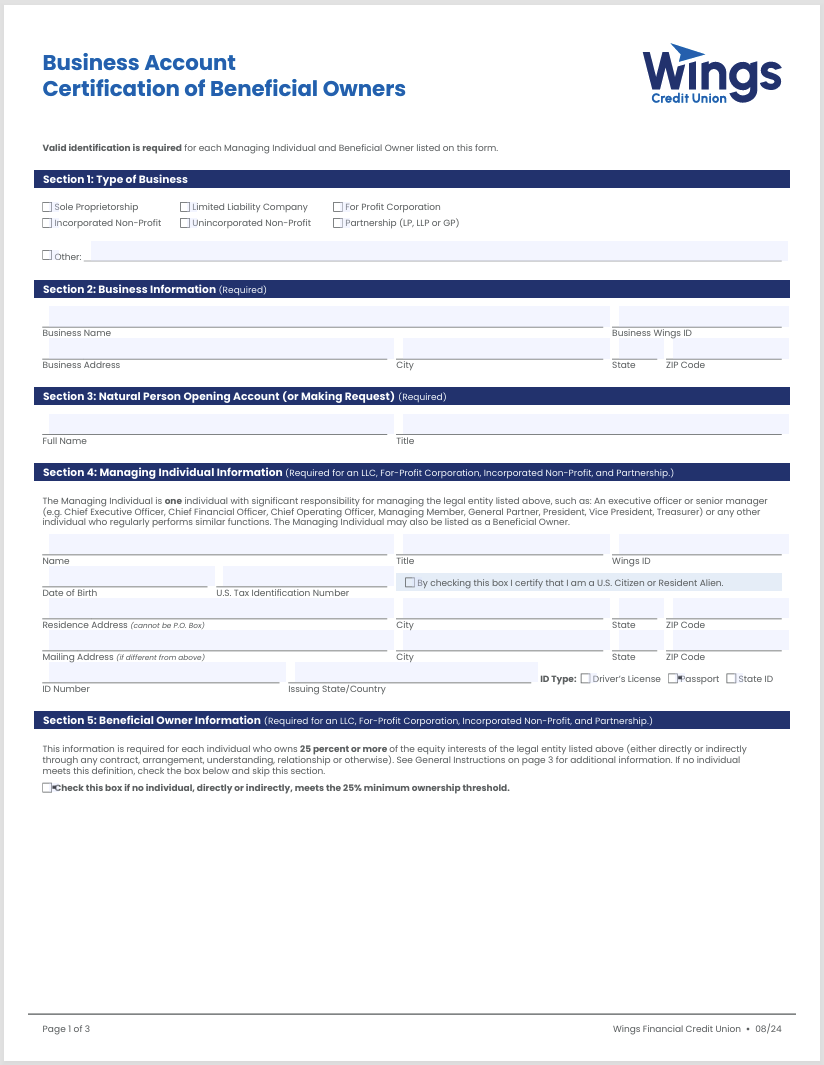
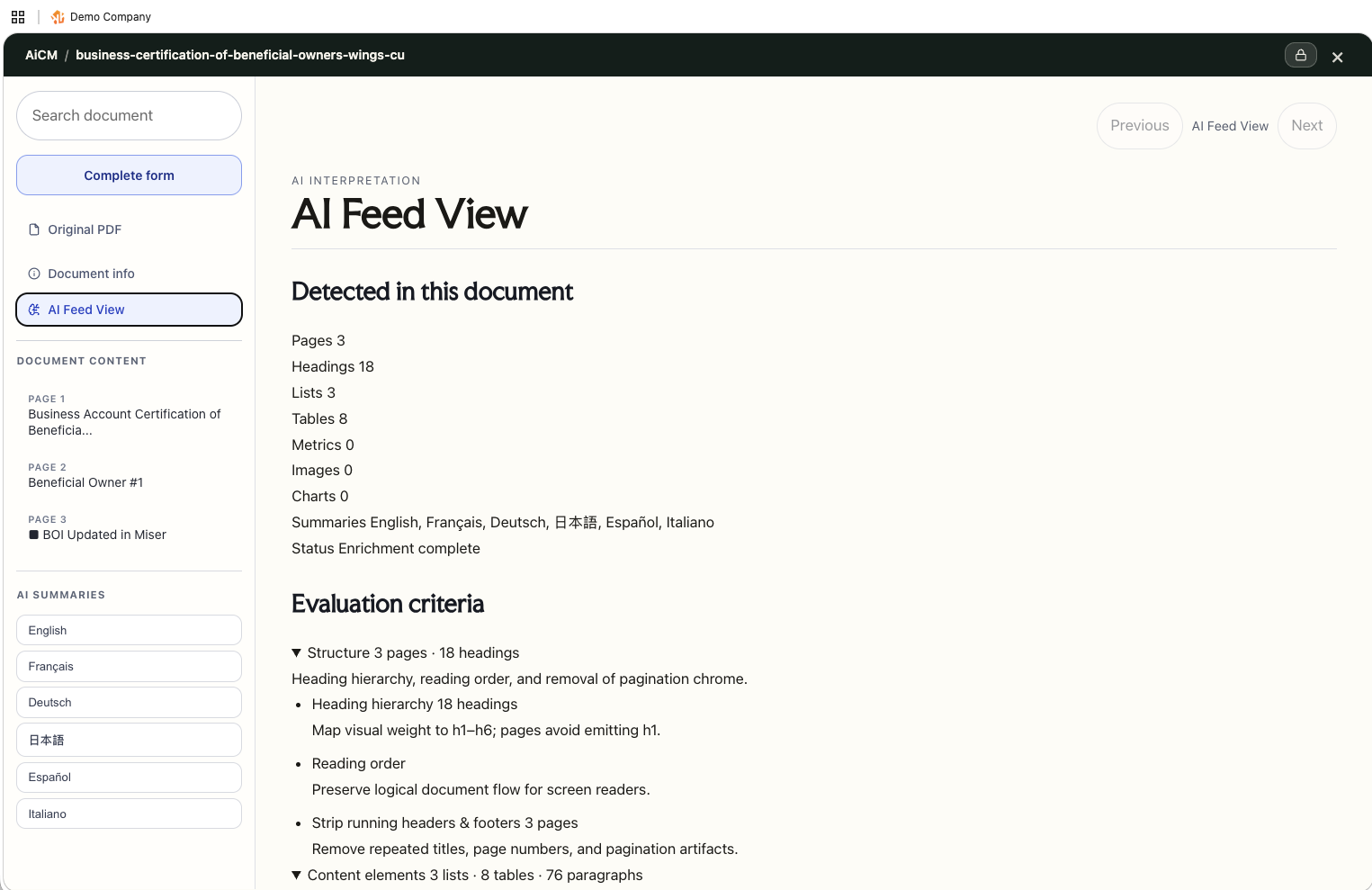
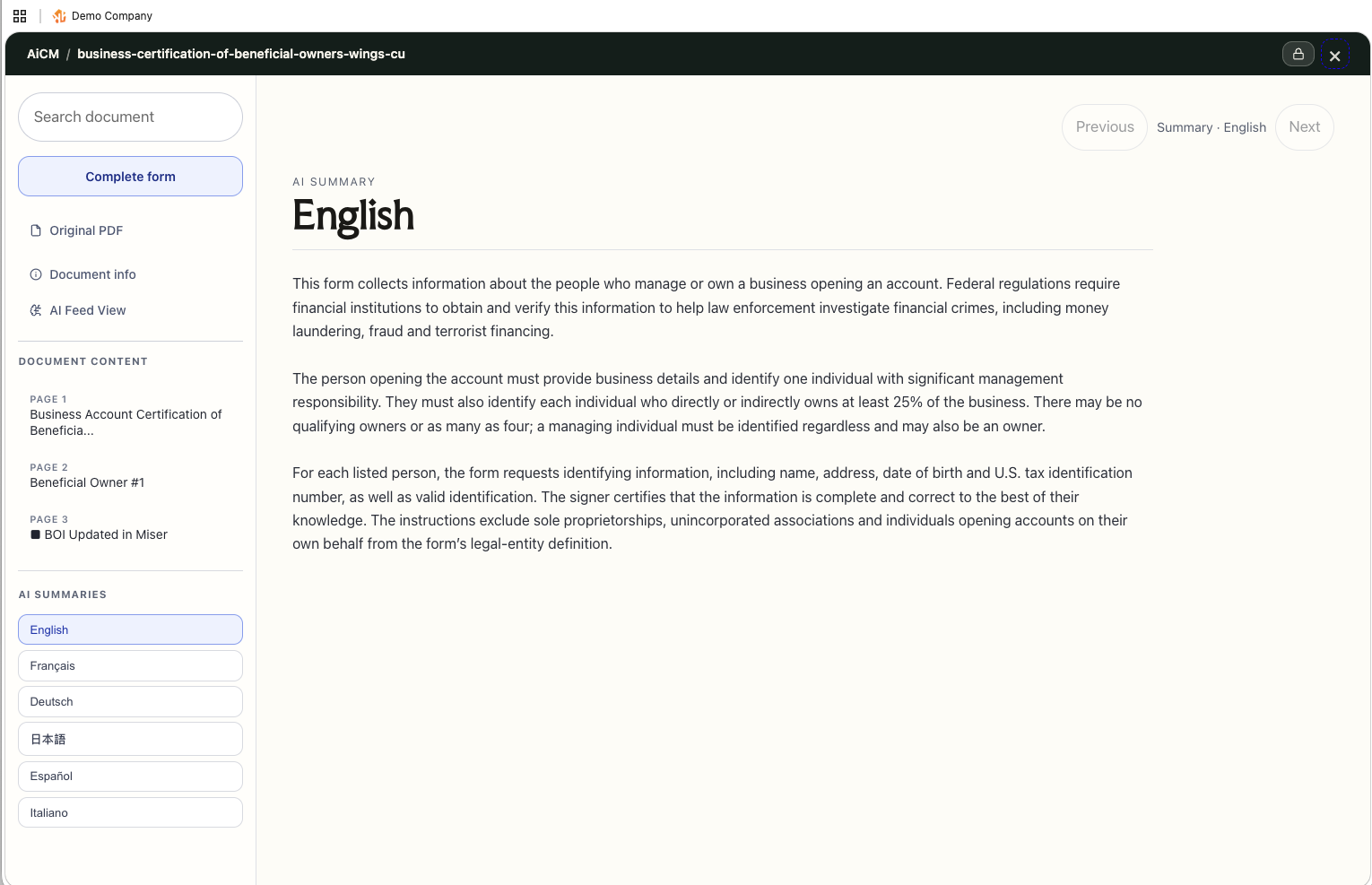
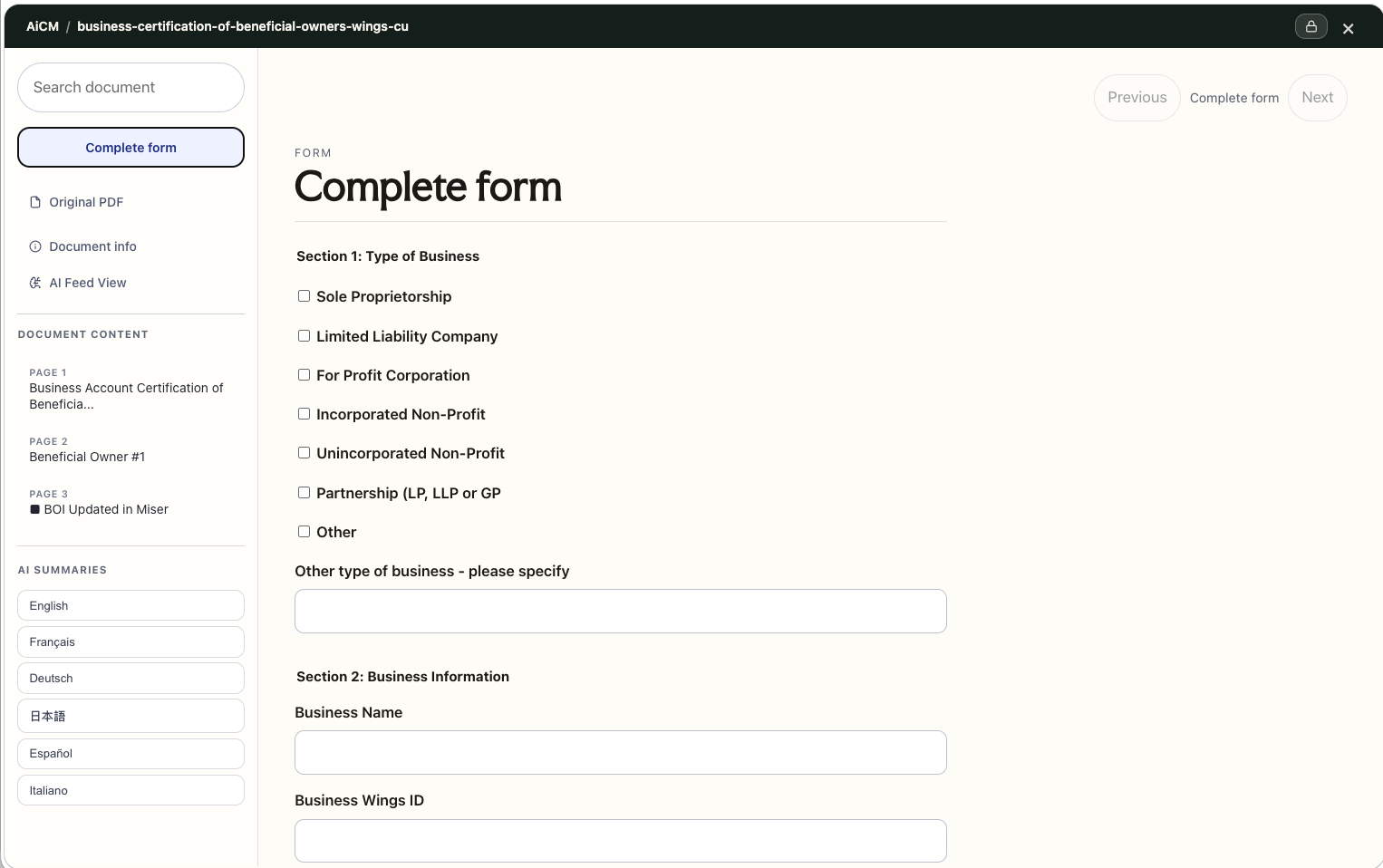
Important note: this is a real example. We are not claiming any association with the organization mentioned, and there is no commentary as to their AI or compliance position offered.
A cost already being paid
The cost of this is being paid today, whether or not AI agents are yet in wide use. Our clients describe forms coming back by email or over the counter, some typed and some handwritten, and staff then entering the answers into the organization’s own system. The customer has already written the information down, and a member of staff then types it in again.
Re-entering information also introduces mistakes. In February 2022 the US National Taxpayer Advocate told the Senate Finance Committee that IRS staff had made transcription errors on 22% of paper tax returns, citing IRS data through August 2021(2). When an answer cannot be read, staff have to go back to the customer and the request waits. Digital Federal Credit Union warns people applying for a business account that illegible answers will delay processing(3). By comparison, when people enter and check their own details, the chance of error can be reduced by up to 97%(4).
Staff retyping paper returns
Paper tax returns with IRS transcription errors, IRS data through August 2021
Radial chart. IRS staff made transcription errors on 22% of paper tax returns, according to the National Taxpayer Advocate's February 2022 testimony to the Senate Finance Committee, citing IRS data through August 2021.
| Measure | Value |
|---|---|
| Paper tax returns with IRS transcription errors | 22% |
Source 2: National Taxpayer Advocate, testimony of February 17, 2022.
People entering their own details
Reduction in the chance of error when people enter and check their own details
Radial chart. When people enter and check their own details, the chance of error can be reduced by up to 97%, according to the AAAnow product and process brief.
| Measure | Value |
|---|---|
| Reduction in chance of error, up to | 97% |
Source 4: AAAnow product and process brief.
For a leadership team these are the same issue at different points in time. The form that has staff retyping answers this year can also stop a customer’s AI agent in the years ahead, and with it the return the organization expected from its AI investment.
There is a further reason to act sooner. The longer the forms and documents underneath stay as they are, the more tasks are affected and the more there is to put right.
Closing the gap
The difficulty for a leadership team is knowing where to begin. Forms have been added to websites over many years by different departments, and many organizations have limited knowledge of where they all are. Finding them, and then rebuilding each as a web page that can be completed online, has looked like a long project to take on.
That part of the gap can now be closed without such a project. Our Secure Tag finds the forms on an organization’s website and automatically turns them into usable web pages. The customer enters their details securely, checks them and submits in the same visit, with nothing to download or send back. The organization receives the answers as the customer entered them and can pass them into the system it already uses. The same pages are prepared for AI agents to complete.
In the credit union example
The member would change their address before leaving the website, and staff would receive it as the member typed it, with nothing to read from a returned form and type again. Staff time moves from retyping to dealing with the request, and the records are more likely to be accurate because the customer has checked them. A barrier between the organization’s customers and its AI plans has been removed.
The AI gap shows in other places too, and it grows when it is left unexamined. Forms are a good place to start because the cost can be seen and there is a remedy for it.
Questions to ask
The example above is a form at a credit union, but the same reliance on forms runs through much of what an organization does: serving customers, dealing with suppliers and investors, hiring and employing staff. A leadership team can begin to find its AI gap without technical knowledge, by asking what these forms cost the organization and whom they hold up. These questions are a place to start.
Customers
- 1How many of the things people need from us still end with a form to print, sign or send back? Does anyone here know?
- 2If a customer asked an AI agent to deal with us tomorrow, how far would it get before it was turned away?
- 3Which customers give up, or go elsewhere, when a simple request means printing and posting a form?
Suppliers and investors
- 4Where are suppliers waiting longer to be set up or paid because of our paperwork?
- 5How long does our paperwork keep an investor waiting before their money can be put to work?
- 6Could a supplier's or an investor's AI agent complete our forms for them, or would it have to stop and hand the task back?
Staff and forms
- 7What does someone joining us have to fill in by hand before they can start work? Have we lost good candidates to the delay?
- 8Would an AI agent, or someone who had never seen it, know what each of our forms is asking for and where each answer belongs?
- 9When a form is finished, how does it get back to us? Could an AI agent take that step for a customer?
Cost and accountability
- 10What are we paying each year for staff to retype what people have already written down?
- 11How many errors come from that retyping, and what does it cost us to find and correct them?
- 12Who is accountable for the AI projects we have funded on the assumption that these tasks can be completed?
The answers are the start of identifying an organization’s AI gap.
AAAnow helps organizations understand their AI gap, close the gap and remove the barriers, and then monitor it. The result is what we call AI confidence.
Sources
- F&A Federal Credit Union. PDF Forms, “Change of Personal Information”. Accessed 17 November 2026. F&A FCU forms page
- Erin M. Collins, National Taxpayer Advocate. Written testimony before the US Senate Committee on Finance, 17 February 2022, section B, “Utilize scanning technology”, printed p. 8, footnote 6. IRS response to the Taxpayer Advocate Service, 16 September 2021, with data through August 2021. Taxpayer Advocate testimony
- Digital Federal Credit Union, a division of First Technology Federal Credit Union. Business Application Checklist, business account application, form M734, February 2026. Printed page 1, item 1. DCU business application
- AAAnow. Product and process brief supplied for this article. AAAnow website